Imagine two shoppers on the same product page. The first buys because the headline says detox, then ends up with a receipt, a folded blanket, and a towel that smells like a gym, but no evidence of what the upgrade bought. The second reads a sauna review noting that partial-body heating trials were excluded because their mechanisms are not necessarily the same as whole-body heating, then buys on the two things the maker states in writing: how hot it gets and how long a session runs. The difference is the point of this article. On an infrared sauna blanket, detox is marketing language, not a documented product property; the research trail stops before it reaches the device.
That distinction does not make the blanket useless. It changes what you should evaluate: warmth, fit, session length, and the maker's stated limits rather than a word that promises a biological outcome.
What an Infrared Sauna Blanket Really Is
Physically it is a fabric-wrapped heating element that lies over you. You are not sitting inside a hot room; you are lying under a warm surface that touches your back, legs, and whatever else it covers, while your head and the surrounding air stay at room temperature. The design intent is portability and low setup cost, not immersion.
The detail that matters later is that a blanket is a partial-body heat exposure by construction, and it cannot be anything else. The fabric only reaches the skin it covers, and the body area outside the wrap never enters the heat. Sauna researchers treat that as a category boundary rather than a footnote. The sauna review most blanket listings mine for citations states that studies of partial body heating were excluded, since proposed mechanisms of action may or may not be the same as whole-body heating.
For a buyer, that is a narrow but useful boundary. The reviewers did not treat partial-body trials as interchangeable with whole-body ones, so their conclusions do not automatically describe a device shaped like a blanket.
A Blanket Is Not a Cabin Sauna
Put the two side by side. In a cabin, the air around you is heated: you sit in it, breathe it, and the exposure surrounds the body from the neck down. In a blanket, the heat source is a surface touching skin under fabric while the room stays cold. Functionally it is a heating pad sized to a person.
The comparison is not academic housekeeping. Almost every sauna study a listing quotes was run in a cabin, a far-infrared cabin, or a steam room, all whole-body exposures with ambient heat. That exclusion means those results are not automatically a statement about a blanket in either direction. The mechanisms proposed for whole-body heating may not carry over, and the reviewers declined to assume they do.
Here is where a buyer's money actually rides on that distinction. A cabin study can lend a clinical tone to a product it never tested, but only if you let the setting disappear. Once you notice that the participants sat in a room while you will be lying under a heated mat, the detox sentence stops reading like a finding and starts reading like decoration.
Where the Detox Promise Actually Comes From
The body of human evidence closest to the claim is research on detoxification programs, and it is limited. There have been only a small number of studies on such programs in people. Some showed positive results on weight and fat loss, insulin resistance, and blood pressure, and the studies themselves were of low quality, with design problems, few participants, or a lack of peer review.
When a listing puts detox in the first screen of images, my read, and it is an editorial judgment you are free to argue with, is that the selling point was never a measurable parameter. Sellers lead with figures when the figures flatter them. A page that opens with a feeling word and buries the wattage is telling you which of the two it would rather you remember.
There is also a plain gap in the record: none of that research tested a heated blanket, and no independent detox-outcome study for this product appears in the materials a buyer can check. A weak finding does not transfer to a product the studies never included. What a buyer inherits from that literature is doubt, not support.
Does Sweating Prove Anything Left the Body
The obvious objection is that you finish a session damp and a little lighter, so something clearly left. Something did: water, along with the salts that travel with it in sweat. Feeling lighter after fluid loss measures what you drank and sweated out. It is not a ledger of what was cleared from tissue, and nobody weighs a towel and calls it a lab result.
That is why the sweat itself is the weakest possible foundation for the claim. The program studies already carry the caution that their designs were shaky, their samples small, and their review thin. Layering a subjective feeling of lightness on top of weak external evidence gives you two soft inputs and no hard one.
When Sauna Reviews Stop Applying to a Blanket
Suppose a shopper reads a dry-sauna review, assumes the blanket inherits its conclusions in both directions, and slides from no proof of detox straight to proven harmless and useful in some other way. That slide is where purchase decisions go wrong, because it treats an absence of evidence as a result.
A skeptic would say these reviews are about cabins, so they say nothing about a blanket either way. That is exactly right, and it cuts both directions. Currently there is insufficient evidence to recommend specific types of sauna bathing for specific clinical conditions, and partial-body heating sat outside the review's scope to begin with. The honest label for a blanket detox claim is unproven: not refuted, and certainly not confirmed.
What survives that sorting is modest and still worth having. Heat is pleasant, setup is simpler than a cabin routine, and the device fits in a closet. Judge it on comfort and convenience, which you can assess yourself, rather than on a clearance function you cannot.
The One Thing to Check Before You Buy
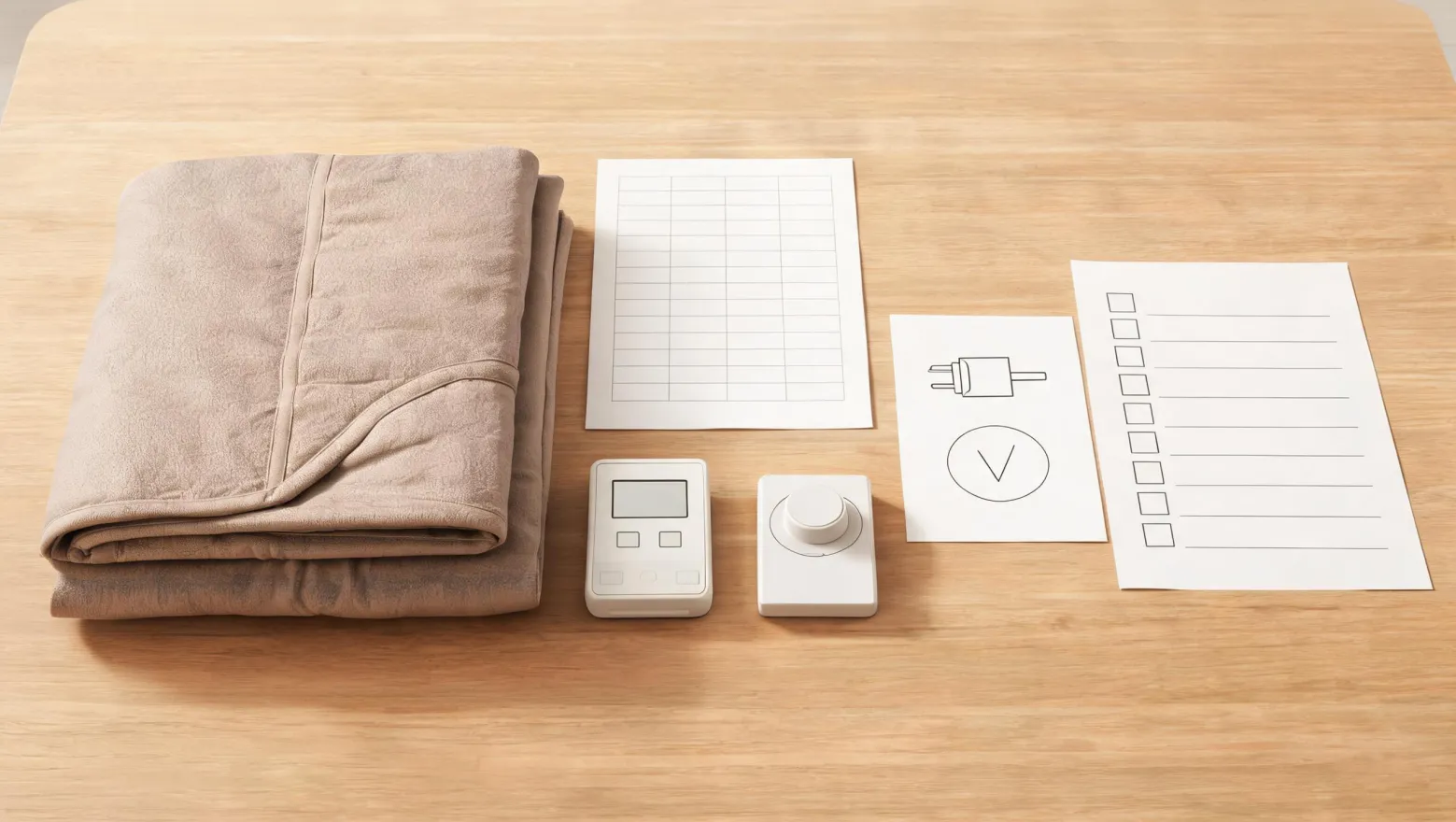
Before you pay, open the maker's own instructions and confirm two things in writing: which body area the device is described as heating, and the temperature and duration limits the maker states. Then read the detox sentence on the listing beside them. If the manual lists heater settings and session lengths while the page leads with cleansing, you have found where the marketing stops and the product begins.
This is the check to make because it is the only one that resolves anything. Detox is not a documented property of the product, so no amount of reading will confirm it, but the heat and time limits are figures the manufacturer commits to and you can compare across models. Where the manual is silent on something you care about, ask the seller directly and keep the answer; do not fill the blank by assumption.
Leave a purchasing question
Comments do not submit an RFQ. Use the requirements form for sourcing coordination.